Monday, 26 March 2018

ACA Reporting Services | The Wolf Is Coming – IRS Updates Q&A regarding Procedures for Employer Mandate Enforcement

Updated March 2018
Last week we wrote about the Boston Business Journal reporting, the employer mandate penalty notices would soon be sent by the IRS. While many may view this as the boy crying wolf yet again, the IRS has updated its Questions and Answers on Employer Shared Responsibility Provisions Under the Affordable Care Act to expound upon the questions related to Making an Employer Shared Responsibility Payment (see questions 55 through 58). The procedures which were updated on November 2, 2017 are the IRS’ strongest signal that the employer mandate penalties are imminent. This article describes the details the IRS has provided regarding the enforcement of the employer mandate penalties and the corresponding appeals procedures.
If the IRS believes an Applicable Large Employer member (ALE member) owes an employer mandate penalty, the ALE member will first receive a Letter 226J. The IRS plans to provide a Letter 226J to each ALE member who had a full-time employee who received a premium tax credit so long as the ALE member did not qualify for one of the relief provision discussed in the final regulations. The Letter 226J will include the following items:

1. An explanation of section 4980H;
2. A table summarizing the proposed employer mandate penalty for each month including an explanation as to whether the liability is under section 4980H(a), section 4980H(b), or neither;
3. An explanation of the table summarizing the proposed employer mandate penalty;
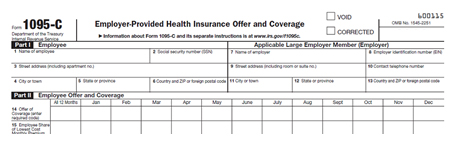
4. A Form 14765 which will contain a list of each full-time employee who received a premium tax credit for a month that the ALE member did not qualify for an affordability safe harbor or other relief. The Form 14765 will also include the code combinations the employer entered on lines 14 and 16 of the employee’s Form 1095-C;
5. A description of the actions the ALE member should take if it agrees or disagrees with the employer mandate penalty in the Letter 226J; and
6. A description of what will happen if the ALE member does not timely respond to the Letter 226J.

An ALE member will typically have 30 days from the date on the Letter 226J to respond. If the ALE member does not respond to the Letter 226J within the 30 day time frame, the IRS will assess the amount of the proposed employer mandate penalty and issue a notice and demand for payment in the form of a Notice CP 220J. Therefore, any ALE member who receives a Letter 226J must respond in a timely manner.

Fortunately, any ALE member who receives a Letter 226J will be provided an opportunity to respond before the notice and demand for payment is made by the IRS. The Letter 226J will provide the ALE member instructions as to how it should agree or disagree, in whole or in part, with the proposed employer mandate penalty amount. Again, as discussed in the paragraph above, it is critical that this response occurs within the 30 day time frame allowed for a response.
Once the ALE member responds to the Letter 226J, the IRS will reply with a Letter 227. The Letter 227 will be an acknowledgement from the IRS that it received the ALE member’s response to the Letter 226J and describe what further action needs to be taken by the ALE member. Apparently, the IRS has created five different versions of the Letter 227 and the ALE member will receive one of the five depending on how it responds to the Letter 226J.
If the ALE member still disagrees with the position the IRS is taking after receiving the Letter 227, the ALE member can request a pre-assessment conference with the IRS Office of Appeals. To request a pre-assessment conference the ALE member will follow the instructions provided in the Letter 227 and Publication 5. The ALE member must request the pre-assessment conference in writing by the response date shown on the Letter 227 which is generally 30 days from the date on the Letter 227.
If it is determined that an ALE member owes an employer mandate penalty, the IRS will issue a notice and demand for payment in the form of a Notice CP 220J. The Notice CP 220J will include a summary of the employer mandate penalty as well as reflect any payments made, credits applied, and the balance due, if any. The notice will also include instructions on how the payment can be made.
The IRS plans to issue the Letter 226J for the employer mandate penalty corresponding to the 2015 calendar year to ALE members in late 2017. All employers need to be on the lookout for the Letter 226J from the IRS. Even if an employer thinks it has done everything correctly and offered all of its full-time employees a plan that provides minimum value at an affordable price, the employer could still receive a Letter 226J.
Regardless of the reason an ALE member receives a Letter 226J, a timely, accurate response is necessary. It would be prudent for any ALE member responding to the Letter 226J from the IRS to consult with an attorney who is familiar with the Forms 1094-C and 1095-C as well as other pertinent Affordable Care Act provisions. Please contact us if we can assist you in completing your ACA reporting obligations.

About the author – Ryan Moulder serves as General Counsel at Accord Systems, LLC, provides Legal Counsel to Healthcare Compliance Inc. and is a Partner at Health Care Attorney’s P.C. Ryan received his LL.M. from Georgetown University Law Center and his J.D. from Saint Louis University School of Law. He has distinguished himself as a leader in the Affordable Care Act arena and has written and spoken on a variety of ACA topics as it relates to compliance for companies.

The post ACA Reporting Services | The Wolf Is Coming – IRS Updates Q&A regarding Procedures for Employer Mandate Enforcement appeared first on ACA Reporting Service | Obamacare Compliance | Health Care Compliance Inc..


source https://healthcare-compliance-inc.com/aca-reporting-services-wolf-coming-irs-updates-qa-regarding-procedures-employer-mandate-enforcement/

Tuesday, 13 February 2018

Affordable Care Act Software 2018 | Section 125 – Cafeteria Plans Overview

A Section 125 plan, or a cafeteria plan, allows employees to pay for certain benefits on a pre-tax basis. Specifically, employers use these plans to provide their employees with a choice between cash and certain qualified benefits without adverse tax consequences. Paying for benefits on a pre-tax basis reduces the employees’ taxable income and therefore reduces both the employees’ and the employer’s tax liability.

In order to receive these tax advantages, a cafeteria plan must comply with the rules of Internal Revenue Code (Code) Section 125 and related Internal Revenue Service (IRS) regulations. Under these rules, a Section 125 plan must have a written plan document and can only offer certain qualified benefits on a tax-favored basis. While self-employed individuals may maintain a Section 125 plan for their employees, only common law employees may participate in the plan.

In addition, once an employee makes a Section 125 plan election, he or she may not change that election until the next plan year, unless the employee experiences a permitted election change event. Also, in order for highly compensated employees to receive the tax advantages associated with a Section 125 plan, the plan must generally pass certain nondiscrimination tests.

Click Here to download the full article.

The post Affordable Care Act Software 2018 | Section 125 – Cafeteria Plans Overview appeared first on ACA Reporting Service | Obamacare Compliance | Health Care Compliance Inc..


source https://healthcare-compliance-inc.com/affordable-care-act-software-2018-section-125-cafeteria-plans-overview/

Friday, 9 February 2018

Full Time Employee Tracking for ACA | Republicans Kill Obamacare’s Controversial Death Panel

The Affordable Care Act is working to make health care more affordable, accessible, and of a higher quality for families, seniors, businesses, and taxpayers alike.

Now Congress has killed a part of Obamacare that never even got to live except in the realm of political theater.

After years of GOP bluster about a Medicare cost-cutting tool — known as the Independent Payment Advisory Board, or IPAB — lawmakers quietly erased that deeply controversial part of the Affordable Care Act in a broad federal spending plan that passed both chambers of Congress while we were sleeping last night. The massive budget deal, which hikes military and domestic spending by hundreds of billions of dollars, passed the House at 5:30 a.m., nearly four hours after the Senate cleared the legislation, my colleagues Mike DeBonis and Erica Werner report.

The IPAB is the second part of President Obama’s health-care law this current Congress has kicked out the door, and unlike the individual mandate — recently unwound by the partisan GOP tax overhaul — many Democrats are on board this time around, but mostly because they’re supporting the larger spending framework.

Discussion of the Affordable Care Act often incites fear, confusion, and anger in people both for and against its passage.

read more at washingtonpost.com


The post Full Time Employee Tracking for ACA | Republicans Kill Obamacare’s Controversial Death Panel appeared first on ACA Reporting Service | Obamacare Compliance | Health Care Compliance Inc..


source https://healthcare-compliance-inc.com/full-time-employee-tracking-aca-republicans-kill-obamacares-controversial-death-panel/

Monday, 29 January 2018

32 Days Left to Distribute Form 1095 to your Employees!

March 2, 2018 is the next deadline to distribute 2017 IRS Form 1095, Employee Statements, to your eligible employees.

HCI offers a Turn-Key Solution to generate IRS Forms 1094 & 1095
35 days remaining – Form 1095 deadline 3-2-2018

* $500 * Ask how you can receive a $500 discount on HCI Services
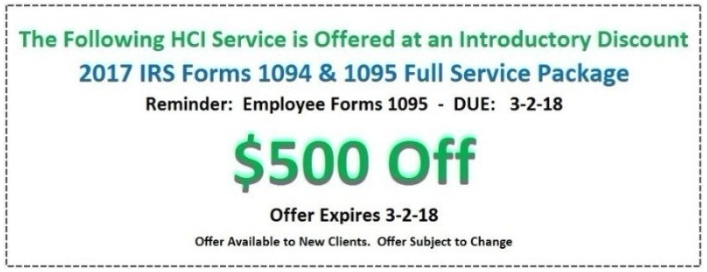
To address the high demand for our services, HCI has added 4 additional teams, all trained and now ready to accept reservations. . To RSVP click here.

As we receive addition information from the IRS, we will pass it along. If you have an immediate concern about ACA compliance, call a Team member at 800-325-1333.

The HCI Team

The post 32 Days Left to Distribute Form 1095 to your Employees! appeared first on ACA Reporting Service | Obamacare Compliance | Health Care Compliance Inc..


source https://healthcare-compliance-inc.com/32-days-left-distribute-form-1095-employees/

HCI’s New and Improved ACA Software for 2017 IRS Forms 1094 & 1095

32 DAYS left to distribute IRS Form 1095 to your Employees!
Healthcare Compliance Inc. Introduces Our New and Improved
ACA Compliance Software

Standard Compliance Services for Large Group Health Plans`

> 2017 IRS Forms 1094 & 1095 Full Service Package ($500 Off)
> Eligibility & Reporting Services – MONTHLY requirement of the ACA
> 2017 IRS Forms 1094 & 1095 – ANNUAL requirement of the ACA
> ACA & ERISA Documentation & Forms – REQUIRED by LAW
> IRS/DOL Audit Prevention Services – IRS now targeting companies for Audits

Three Ways to Connect With HCI

1. Call HCI 800-325-1333
2. Email HCI Info@Healthcare-Compliance-Inc.com
3. Visit HCI www.Healthcare-Compliance-Inc.com

The post HCI’s New and Improved ACA Software for 2017 IRS Forms 1094 & 1095 appeared first on ACA Reporting Service | Obamacare Compliance | Health Care Compliance Inc..


source https://healthcare-compliance-inc.com/hcis-new-and-improved-aca-software-for-2017-irs-forms-1094-1095/

Thursday, 4 January 2018

IRS Extends Deadline for Filing Form 1095-C to Employees

On Dec. 22, 2017, the Internal Revenue Service issued Notice 2018-06, which provides certain extensions related to Affordable Care Act reporting for 2017. Specifically, this notice:

• Extends the due date for furnishing forms to individuals under Sections 6055 and 6056 from Jan. 31, 2018, to March 2, 2018
• Extends good-faith transition relief from penalties related to 2017 information reporting under Sections 6055 and 6056

The due dates for filing forms with the IRS for 2017 are not affected by this guidance. The due date for filing with the IRS under Sections 6055 and 6056 remains Feb. 28, 2018 (April 2, 2018, if filing electronically).

Despite the delay, employers and other coverage providers are encouraged to furnish 2017 statements to individuals as soon as they are able.

Read more… IRS Notice 2018-06

The post IRS Extends Deadline for Filing Form 1095-C to Employees appeared first on ACA Reporting Service | Obamacare Compliance | Health Care Compliance Inc..


source https://healthcare-compliance-inc.com/irs-extends-deadline-filing-form-1095-c-employees/

Thursday, 14 December 2017

Affordable Care Act ALE Compliance | Health Plan Rules – Treating Employees Differently

Some employers may want to be selective and treat employees differently for purposes of group health plan benefits. For example, employers may consider implementing the following plan designs:

– A health plan “carve-out” that insures only select groups of employees (for example, a management carve-out);
– Different levels of benefits for groups of employees; or
– Employer contribution rates vary based on employee group.

In general, employers may treat employees differently, as long as they are not violating federal rules that prohibit discrimination in favor of highly compensated employees. These rules currently apply to self-insured health plans and arrangements that allow employees to pay their premiums on a pre-tax basis. The nondiscrimination requirements for fully insured health plans have been delayed indefinitely.

Employers should also confirm that any health plan rules do not violate other federal laws that prohibit discrimination. In addition, employers with insured plans should confirm that carve-out designs comply with any minimum participation rules imposed by the carrier.

Click Here to download the full article.

ACA Reporting Service | California Supports Obamacare by Outspending U.S. 4-to-1 on Ads

The post Affordable Care Act ALE Compliance | Health Plan Rules – Treating Employees Differently appeared first on ACA Reporting Service | Obamacare Compliance | Health Care Compliance Inc..


source https://healthcare-compliance-inc.com/affordable-care-act-ale-compliance-health-plan-rules-treating-employees-differently/